
US Based · Local Sample Pick Up
Illumina Stranded mRNA Sequencing Service
Poly(A)-captured, strand-specific gene expression profiling on Illumina NovaSeq X+. Extraction through analysis in our SF Bay Area lab, with expedited service available on every order.
Library prep
Illumina Stranded mRNA
RNA input
>50 ng, RIN >7
Sequencing
NovaSeq X+ PE150
Read depth
20M paired reads
Turnaround
Expedited available
Price
$129/sample
Volume pricing available
Service Highlights
From RNA to results, all in one lab
Enter our service workflow wherever you need us. Every stage is performed in-house with defined QC criteria and validated Illumina chemistry.
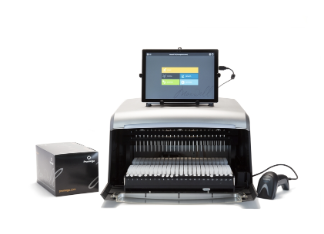
Extraction & Sample QC
- >50 ng Tot RNA in 25 µl, RIN >7
- Qubit & TapeStation reports
- Alternative workflows for low input
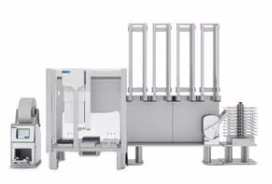
Library prep
- Illumina Stranded mRNA Prep
- Oligo-dT poly(A) capture
- >90% reads on coding transcripts
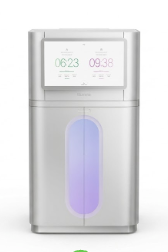
Sequencing
- Illumina NovaSeq X+ PE 150
- 20M paired reads
- UDIs & Low duplication rates
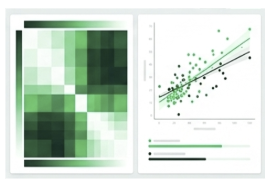
Analysis
- 3–4 week turnaround
- Publication-ready figures
- Secure FTP, S3 or BaseSpace
Sample Requirements
Check your sample compatibility
Validated for eukaryotic organisms with poly(A) — human, mouse, rat and more.
| Sample type | SAMPLE REQUIREMENTS |
|---|---|
| Purified RNA | 0.05 µg at RIN >7, or 1 µg at RIN >5. Volume: 25 µl |
| Cells | >50,000 cells, frozen and pelleted. Cell prep protocol. |
| Tissue | >30 mg fresh frozen tissue |
| Blood | >>1.5 mL whole blood in PaxGene Blood RNA tubes. We will perform Invitrogen globin removal. See our Blood Service |
Alternative workflows
Samples outside these thresholds are still compatible with other services below.
Need single-cell, spatial, or multi-omic resolution?
Technical excellence
Gold standard QC & Illumina chemistry
Automated liquid handling removes operator variance, so your samples stay comparable — whether that is eight or eight hundred.
Illumina NovaSeq X Plus with 2x150 bp paired-end chemistry and Unique Dual Indexes to prevent index hopping. Read depth is configurable from 10M to 40M+ paired reads per sample based on your analysis goal.
Service experience
Working with us
Every project is run by scientists, tracked in one portal, and processed entirely in our own lab.
PhD-Level Project Oversight
A PhD scientist owns your project from design through interpretation.
Dedicated Project Manager
One point of contact from quote through delivery.
Easy Ordering
Register samples, track status, and download results in one portal.
100% US-Based
Every stage runs in-house in Foster City, CA. No outsourcing.
Resources & insights
Technical resources

Spec Sheet
Illumina Stranded mRNA Spec Sheet
Library prep chemistry, input ranges, read depth options, and deliverables.

BLOG
Why RIN Matters: How to Optimize Your RNA Quality for Successful mRNA-Seq
Why poly(A) capture fails on fragmented RNA, and how to hit the RIN >7.0 threshold.
BLOG
Poly(A) Selection vs. Ribosomal Depletion: Which Approach Is Right for Your Project?
Poly(A) for high-quality mRNA; ribo-depletion for lncRNAs, bacteria, or degraded FFPE.
Frequently asked questions
Planning your mRNA-Seq project
Samples & service
What happens if my samples have a RIN score lower than 7.0?
Because our standard RNA-Seq uses poly(A) capture, degraded RNA lacks the intact poly(A) tails needed for binding. This leads to severe 3′ bias or library preparation failure. For low RIN scores or FFPE tissue, we recommend switching to our Total RNA-Seq with ribosomal depletion or low-input RNA-Seq workflows, which do not rely on poly(A) integrity.
Does this service work for bacterial or prokaryotic samples?
No. Bacterial mRNA does not possess stable poly(A) tails. For prokaryotic systems, use our ribosomal depletion workflow, which selectively removes bacterial rRNAs while preserving all underlying transcripts.
Do you support non-model organisms without a reference genome?
Yes. For species with an available reference we align to the standard annotation. Without a reference we can run a de novo transcriptome assembly and quantify against it, or align to the closest annotated relative. Discuss your organism with us during study design so we can set expectations on annotation depth.
Do you offer sample extraction services?
Yes. If you cannot isolate the RNA yourself, ship us pelleted cultured cells, flash-frozen tissue blocks, or whole blood in stabilizing tubes. Our team performs automated magnetic-bead extractions for an additional per-sample fee.
Data & delivery
How is my data delivered?
FASTQ files and a QC report via secure FTP, S3, or BaseSpace.
What is the recommended sequencing depth?
How long is my data available for download?
Your data is available on our secure FTP for 2 weeks after delivery, and we retain it in storage for 60 days. Extension options are available — ask your project manager, or request a direct transfer to your own AWS, Globus, or cloud storage.
Can I add analysis after I have received the FASTQ files?
Yes. Analysis can be added any time. If within the 60-day data retention window you will not need to resubmit the data. Contact your project manager and we will quote the additional analysis.
Ordering & logistics
How do I ship samples, and under what conditions?
Register your samples in the customer portal to generate your shipping documents, then print them and include them in your package. All samples should be shipped on dry ice overnight, or you can schedule a local same-day courier in the SF Bay Area.
How do I place an order?
What is your typical turnaround time?
Standard turnaround is 3 to 4 weeks from the day your samples pass incoming QC to final data delivery. Expedited processing is available on every order, in 10 to 14 business days — just ask your project manager.
Is there a minimum number of samples per project?
There is no order minimum. We do recommend at least three biological replicates per condition for reliable differential expression, and per-sample pricing improves with batch size.
Get started with your project
Ready to accelerate your transcriptomic research? Contact our team today for a technical consultation. We will guide you through sample requirements, library prep details, and depth optimization aligned to your downstream analysis goals.
- $129/sample, with volume pricing available
- Data in 3 to 4 weeks
- >98% strand specificity
- 100% in-house at Foster City, CA