







Immune Repertoire Sequencing (Immune Profiling)
Decode TCR and BCR repertoire
Identify and Characterize the Full Diversity of T- and B-Cell Receptors
TCR and BCR profiling enables comprehensive mapping of the immune repertoire to better understand disease mechanisms, characterize immunological responses, identify biomarkers, and support the development of immunotherapies. This approach has been instrumental in the success of immune-based cancer treatments and the discovery of therapeutic antibodies.
Advances in next-generation sequencing (NGS) now enable accurate, unbiased profiling of T-cell and B-cell receptors with high efficiency and depth. Using 10x Genomics Chromium and Takara SMART-Seq workflows, researchers can achieve full-length receptor coverage and high-sensitivity detection of rare clonotypes in both bulk and single-cell analyses. When combined with other assays, these data can serve as valuable prognostic or response markers for translational research.
At Signios Bio, we offer RNA-based TCR and BCR repertoire profiling services for both bulk and single-cell analysis, enabling high-resolution insights into immune diversity and clonotype distribution.
Download our latest immune repertoire resources to explore real data and analysis workflows:
Reliable Immune Profiling Across Diverse Sample Types
From PBMCs, blood, tissue, and FFPE samples—Signios Bio delivers accurate immune profiling results even from low-input or challenging materials.
Support with experimental design and selection of appropriate application.
Higher sensitivity in detecting low frequency TCRs/BCRs including samples with low input.
End-to-end solutions for extraction, sample QC, library preparation, sequencing and bioinformatics analysis.
Accurate representation of expressed TCRs/BCRs vs non-functional TCRs/BCRs with improved ability to call novel and low frequency clones.
Immune Repertoire Sequencing Workflows
Signios Bio offers a range of TCR and BCR sequencing workflows tailored to your study design, input material, and resolution needs.
Explore the immune repertoire across species
SMARTer TCR α/β– Human, Mouse, rat and non-human primates
10x Single cell TCR and BCR – Human, mouse and rat
MedGenome FFPE TCR Profiling – Human
SMARTer BCR IgG H/K/L – Human and Mouse
Library Prep Workflow
Suitable for
Starting Material
Library Prep Workflow
Takara SMART-Seq α/β with UMI
Suitable for
Full-length alpha and beta chain capture for human or mouse blood, tissue, and cell samples
Starting Material
Total RNA: 10–1000 ng or 1K–10K cells
Library Prep Workflow
Takara SMARTer BCR IgG/IgM H/K/L Profiling
Suitable for
Full-length heavy and light chain capture for human or mouse
Starting Material
Total RNA: 10–1000 ng or 1K–10K cells
Library Prep Workflow
10x 5’ Gene Expression + VDJ TCR
Suitable for
Single-cell TCR analysis of human or mouse blood, tissue, and cell samples
Starting Material
Fresh or cryopreserved cells (500K–1M)
Library Prep Workflow
10x 5’ Gene Expression + VDJ BCR
Suitable for
Single-cell BCR analysis of human or mouse blood, tissue, and cell samples
Starting Material
Fresh or cryopreserved cells (500K–1M)
These workflows enable both bulk and single-cell immune repertoire sequencing, allowing identification of clonotypes, V(D)J rearrangements, and CDR3 region diversity across TCR and BCR populations.
Bioinformatics and Data Analysis Options
Bioinformatics support is available as an optional add-on or integrated component of your project. Signios Bio provides detailed analyses to characterize repertoire diversity, clonality, and gene usage.
Available Analysis Options:
- Bulk RNA-Based Analysis: CDR3 diversity, V(D)J usage, clonotype quantification, and frequency distributions.
- Single-Cell Analysis: TCR α/β or BCR heavy/light chain pairing, clonotype clustering, and diversity scoring.
- Advanced Analysis: Comparative repertoire studies, immune diversity metrics, and longitudinal response tracking.
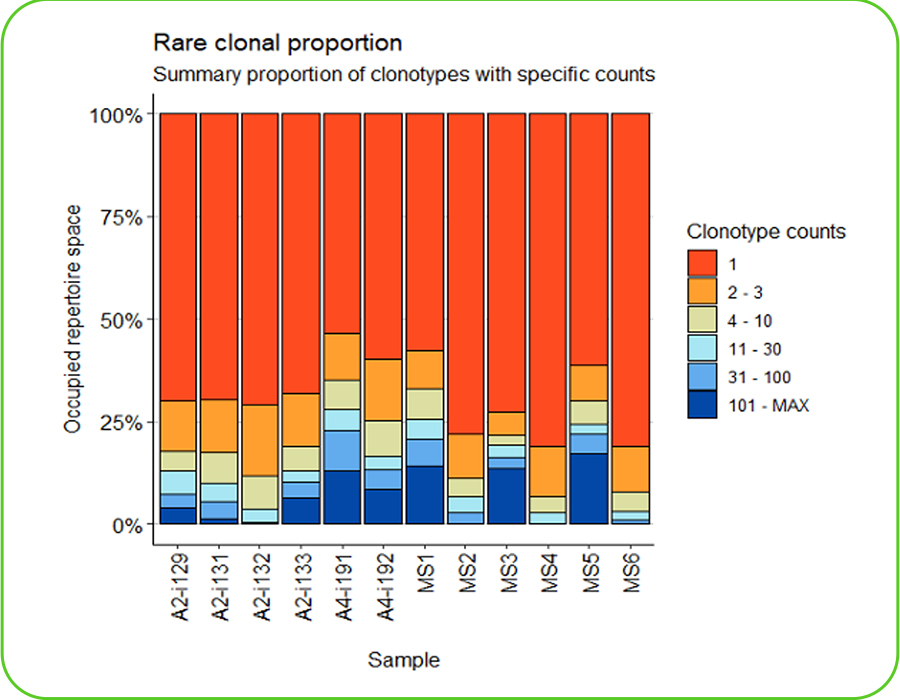
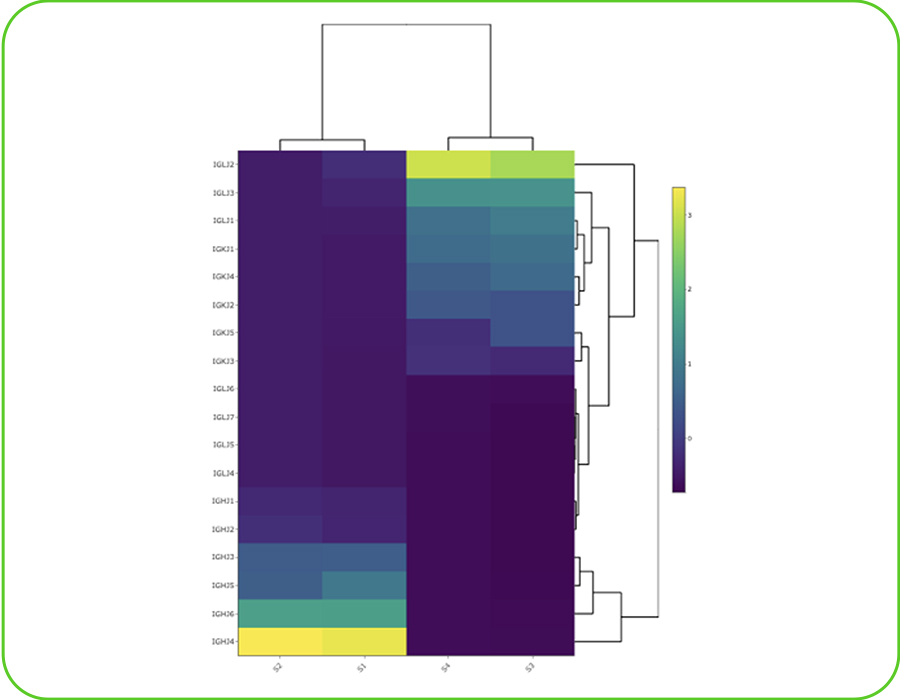
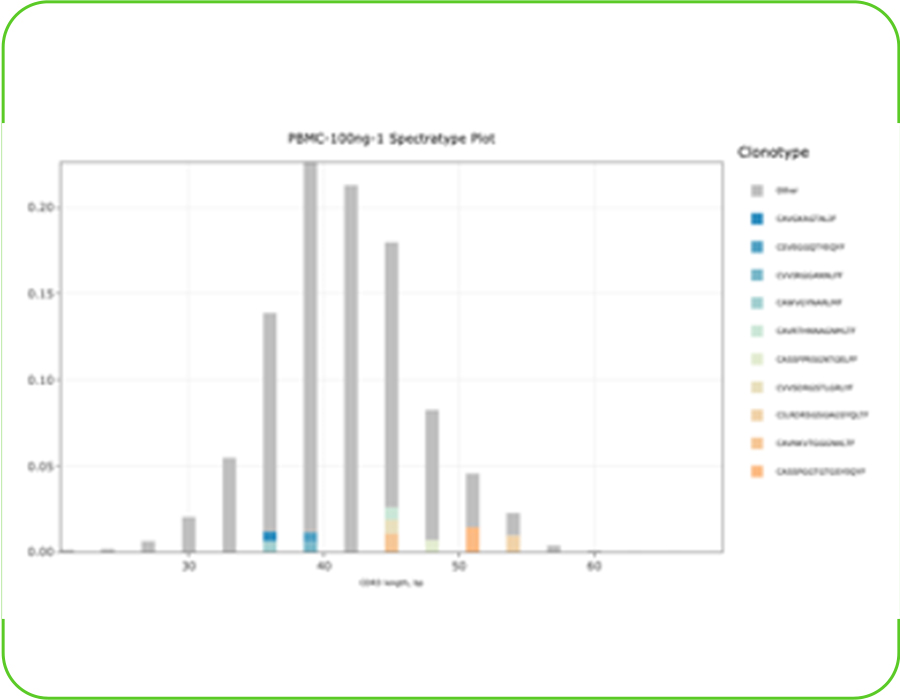
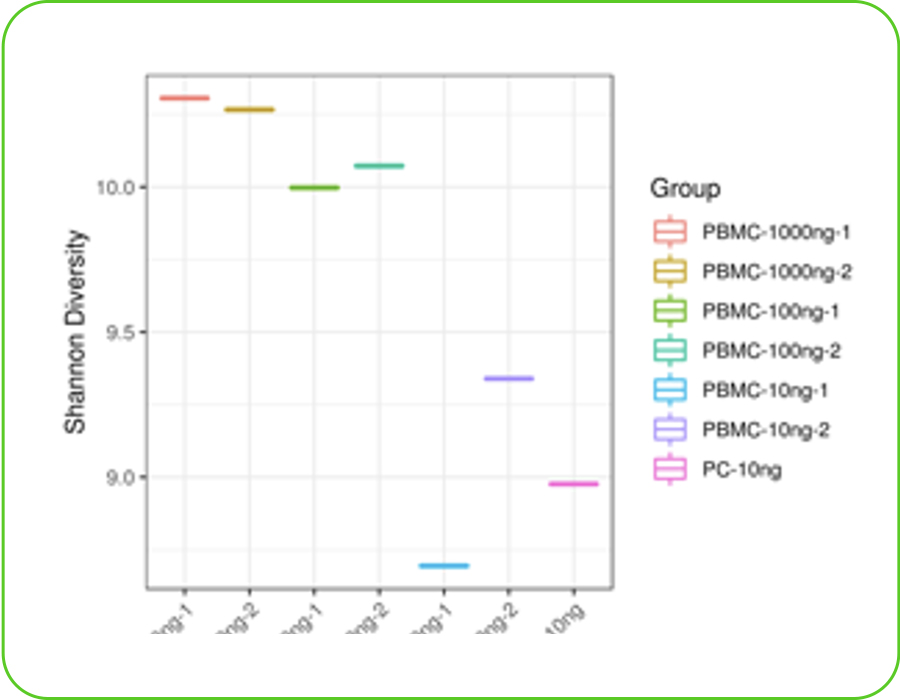
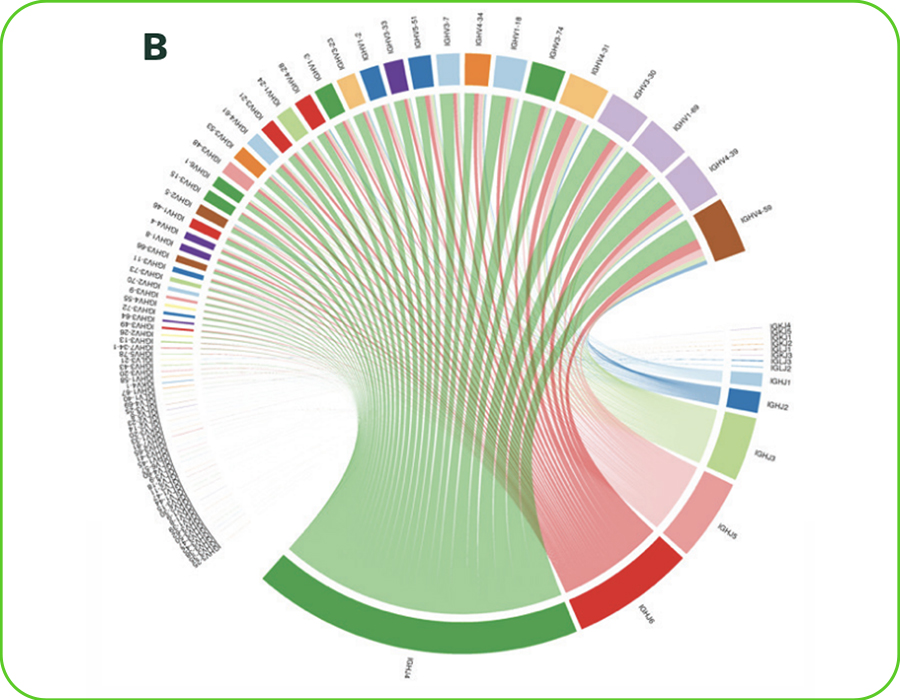
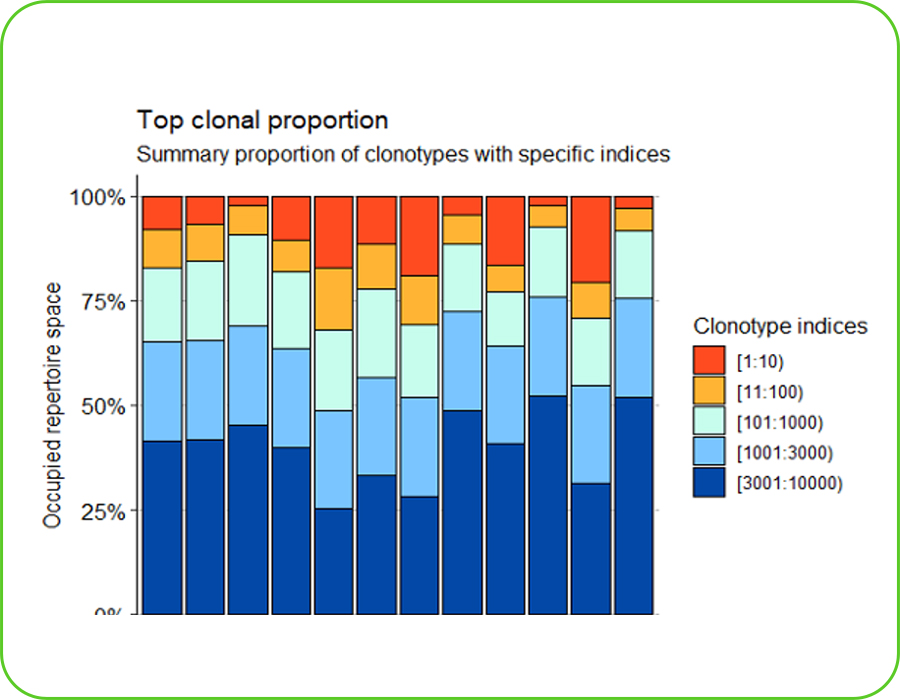
All projects include quality control metrics and summary reports, with optional advanced visualizations such as clonotype heatmaps, diversity plots, and V(D)J gene pairing diagrams.
Applications of Immune Repertoire Sequencing
Our immune repertoire sequencing services provide comprehensive immune profiling data to advance research in:
- Immuno-oncology and checkpoint therapy studies
- Vaccine development and response monitoring
- Autoimmune disease mechanisms
- Infectious disease and pathogen response
- Antibody discovery and BCR diversity analysis
- Adoptive T-cell and CAR-T therapy development
Signios Bio’s validated workflows for TCR and BCR repertoire profiling have been applied in both human and mouse models, enabling robust analysis of immune diversity in translational research.
Explore how immune repertoire data informs both scientific discovery and therapeutic design:
Immune repertoire diversity: Key to understanding disease processes and creating novel therapies
Exploring T-Cell Receptor Repertoire Sequencing: Insights into Immune Diversity
Why Choose Signios Bio
Signios Bio combines advanced NGS technology with expertise in TCR and BCR repertoire analysis to provide reliable immune profiling data.
- End-to-End Support – From RNA extraction to clonotype-level data interpretation.
- Flexible Platforms – Bulk and single-cell analysis using Takara SMART-Seq and 10x Genomics workflows.
- Diverse Applications – Suitable for human and mouse models across oncology, autoimmune, and infectious disease research.
- Bioinformatics Expertise – Standard and custom analysis for clonotype quantification and diversity tracking.
- Trusted by Academic and Industry Leaders – Supporting immunology and translational research worldwide.
Get Started with Immune Repertoire Sequencing
Whether your study involves tracking immune response, monitoring therapy effectiveness, or discovering novel TCR or BCR clonotypes, Signios Bio delivers the data and expertise to help you uncover immune diversity.
Our team can assist with workflow selection, sample preparation, and bioinformatics options tailored to your research goals.
Explore Related Sequencing Solutions
Frequently Asked Questions
1. What is immune profiling and how does it work?
Signios Bio performs immune profiling by sequencing T‑cell and B‑cell receptor repertoires (TCR/BCR) using next-generation sequencing (NGS). We support both bulk (cells, RNA, FFPE) and single-cell (10x Genomics) formats to capture full-length clonotypes, V–J gene usage, CDR3 length, and clonotype frequency.
2. Immune profiling applications in cancer therapy
Signios Bio’s TCR/BCR sequencing enables analysis of tumor-infiltrating lymphocytes, clonal diversity, and immune evasion mechanisms. Our single-cell platforms provide paired receptor data and insights into therapeutic resistance or response.
3. What sample types are used in immune profiling?
We can handle a wide variety of inputs: fresh cells or tissues, cryopreserved samples, RNA, and FFPE, supporting bulk TCR α / β / γ / δ and single-cell α / β clonotypes.
4. Which technologies are used in immune profiling?
Signios Bio uses:
- SMARTer kits and Illumina sequencing for bulk TCR/BCR
- 10x Genomics Chromium for single-cell immune profiling
5. How long does immune profiling take?
While exact times vary, the process—from consultation, sample QC, library prep, sequencing, to AI-driven bioinformatics—is typically completed with a turnaround time of 3–4 weeks
6. What bioinformatics tools analyze immune profiling data?
Signios Bio offers a robust bioinformatics suite with AI-enhanced pipelines, including Cell Ranger for single-cell data, and algorithms to report clonotypes, V–J usage, CDR3 distribution, and shared clones.
7. Can immune profiling detect rare immune clones?
Yes. Our high-depth NGS and single-cell workflows are designed to detect low-abundance and novel clones, supporting use cases like minimal residual disease or early immune responses.
8. Why is spatial immune profiling important?
Though Signios Bio primarily offers sequencing, we integrate multiomics (including spatial transcriptomics) to reveal where immune cells reside and act—adding vital context to repertoire data.
Contact Us