
US Based · Degraded & Archived Samples
FFPE RNA Sequencing Service
High-quality transcriptomic data from FFPE and heavily degraded archived specimens. Takara SMART-Seq Total RNA with ZapR depletion and UMIs, end-to-end in our SF Bay Area lab.
Library prep
Takara SMART-Seq Total RNA
RNA input
250 pg–1 µg, DV200 >20%
Sequencing
NovaSeq X+ PE150
Read depth
20M paired reads
Turnaround
3–4 weeks with expedited options
Price
$265/sample
Volume pricing available
Service Highlights
From FFPE to results, all in one lab
Every stage is performed in-house with defined QC criteria and validated Takara chemistry built for degraded material.
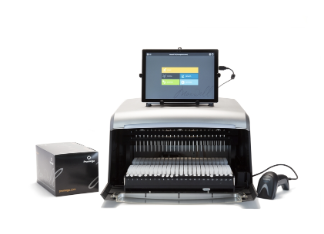
Extraction & Sample QC
- 250 pg total RNA, DV200 >25%
- 250 pg total RNA, DV200 >25%
- Blocks, slides or purified RNA
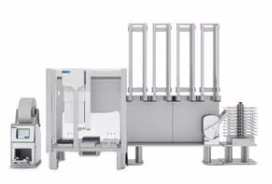
Library prep
- Takara SMART-Seq Total RNA
- Random hexamer priming
- ZapR rRNA depletion
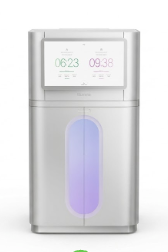
Sequencing
- Illumina NovaSeq X+ PE 150
- 20M paired reads
- UMI-corrected duplicate removal
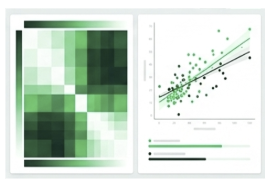
Analysis
- 3–4 week turnaround
- >90% reads on transcripts
- Secure FTP, S3 or BaseSpace
Sample Requirements
Check your sample compatibility
Validated for eukaryotic organisms with poly(A) — human, mouse, rat and more.
| Sample type | SAMPLE REQUIREMENTS |
|---|---|
| Total RNA | >250 pg total RNA in15µl, DV200 >25%. |
| FFPE blocks | Intact blocks shipped at room temperature. We handle deparaffinization and extraction in house. |
| FFPE slides / scrolls/ curls | 5-10 scrolls or unbaked slides at 5–10 µm. |
| Core biopsies | Archived core needle biopsies |
Alternative workflows
Samples outside these thresholds are still compatible with other services below.
Need spatial, immune profiling, or tumor microenvironment analysis?
Technical excellence
Built for degraded and cross-linked RNA
Automated liquid handling removes operator variance, so your samples stay comparable.
Illumina NovaSeq X Plus with 2x150 bp paired-end chemistry. 30–40M reads suits moderately preserved samples at DV200 >50%; 50–60M compensates for heavier degradation between DV200 25% and 50%.
Service experience
Working with us
Every project is run by scientists, tracked in one portal, and processed entirely in our own lab.
PhD-Level Project Oversight
A PhD scientist owns your project from design through interpretation.
Dedicated Project Manager
One point of contact from quote through delivery.
Easy Ordering
Register samples, track status, and download results in one portal.
100% US-Based
Every stage runs in-house in Foster City, CA. No outsourcing.
Resources & insights
Technical resources

Spec Sheet
Takara SMART-Seq Total RNA Spec Sheet
ZapR depletion chemistry, input ranges, DV200 thresholds, and deliverables.

BLOG
Beyond the RIN Score: Why DV200 Is the Only Metric That Matters for FFPE
Audit biobank inventory with TapeStation or Fragment Analyzer data to predict prep success.
BLOG
Poly(A) Selection vs. Ribosomal Depletion: Which Approach Fits Your Samples?
Poly(A) for intact mRNA; ZapR ribo-depletion for lncRNAs, bacteria, or degraded FFPE.
Frequently asked questions
Planning your FFPE RNA-Seq project
Samples & service
What is a DV200 score, and why not RIN?
RIN is calculated from the 28S/18S ribosomal bands. In FFPE those bands are almost completely shattered, so nearly every sample returns an uninformative RIN of 1 to 2. DV200 measures the percentage of fragments longer than 200 nucleotides, which actually predicts whether library prep will succeed.
Why must samples be completely free of EDTA?
The reverse transcriptase and amplification enzymes in the Takara SMART-Seq workflow need magnesium as a cofactor. EDTA chelates magnesium, and even trace amounts can halt first-strand synthesis and fail the entire library prep. Samples must be in clean, nuclease-free, EDTA-free water.
How should I ship FFPE blocks versus purified RNA?
Intact FFPE blocks and cut slides are stable at room temperature and ship by standard overnight delivery — no ice needed. Purified RNA extracted from FFPE is fragile and must ship in a microcentrifuge tube on a generous amount of dry ice.
Can I ship un-extracted FFPE slides or scrolls?
Yes. Send 5 to 10 freshly cut scrolls or unbaked slides at 5–10 µm, wrapped tightly in parafilm. Our team runs an optimized deparaffinization and extraction protocol designed to maximize yield and limit cross-linking damage.
Data & delivery
What role do the 8-nt UMIs play?
Degraded samples contain fewer unique molecules, so they need more PCR cycles and generate more technical duplicates. Tagging each original molecule with an 8-nucleotide barcode before amplification lets the pipeline identify and remove those copies, so the final counts reflect true biological expression.
How is my data delivered?
What sequencing depth should I choose?
How long is my data available for download?
Your data is available on our secure FTP for 2 weeks after delivery, and we retain it in storage for 60 days. Extension options are available — ask your project manager, or request a direct transfer to your own AWS, Globus, or cloud storage.
Can I add analysis after I have received the FASTQ files?
Yes. Analysis can be added any time. If within the 60-day data retention window you will not need to resubmit the data. Contact your project manager and we will quote the additional analysis.
Ordering & logistics
How do I place an order?
Submit your inquiry below and our team will help create an account and walk you through submitting your samples.
What is your typical turnaround time?
Is there a minimum number of samples per project?
There is no order minimum. We do recommend at least three biological replicates per condition for reliable differential expression, and per-sample pricing improves with batch size.
Get started with your project
Ready to unlock the transcriptomic data inside your archived tissue inventory? Contact our team for a technical consultation. We will guide you through sample submission, extraction logistics, and the sequencing depth that suits your DV200 range.
- $265/sample, with volume pricing available
- Data in 4 to 5 weeks
- UMI-corrected duplicate removal
- 100% in-house at Foster City, CA